"Subscribed for quick summaries of topics. Saves time. Googling and Youtube and collating info isn't convenient."
— RB

Making practical sense of software and AI.
Are reasoning models actually thinking?
How AI learned to count the R's in strawberry
What is agent memory?
How AI memory works, and why "remembering" turns out to be the easy part.
What's a decision model?
And why do we need models like Jev?
GPU (Graphics Processing Unit)
GPUs are specialized chips that do thousands of simple calculations simultaneously, making them perfect for AI training
Training
Training is the process of creating an AI model and teaching it how to actually do something useful.
Post-training
LLM post-training turns a model from a knowledgeable blob that produces rambling answers, into a helpful assistant.
AI agent
An AI agent is a model plus a harness — the model decides what to do, and the harness gives it the tools and the loop to actually go do it.
Metric
When developers monitor their applications and infrastructure to make sure things run smoothly, they set up metrics to track specific points of performance: how fast an API request gets fulfilled, the percentage of requests that fail, or even what % of total processing capacity is a server using up.
Data lake
A Data Lake is an unstructured place to put data. It’s usually meant for long term storage and infrequent querying.

Segment
Segment helps teams track their product and marketing data and send it to whichever tools it needs to go to.

LangChain
LangChain helps developers build AI experiences into their products.
What's DuckDB?
Meet the world's friendliest database (allegedly).
Software Eng for Vibe Coders: Databases + Storage
Where your vibe coded app actually keeps its data, and how it might break when real users show up.
What does Turbopuffer do?
And what's going on in the category formerly known as vector databases?
Production database
The largest category of databases – both in terms of number of available options and total market size – is production databases.
Metadata
Metadata is data about data (🤯).

MongoDB
MongoDB is a highly popular unstructured, NoSQL document database for powering your applications.

Convex
Convex is a backend for app developers: the database, the server code and live updates to the app, in one place.
The Vibe Coder's Guide to Observability
How to find out your app broke before your users do.
The Vibe Coder's Guide to Cloud + Scaling
How to survive your app going viral.
The Vibe Coder's Guide to Deployment
How your app gets off your laptop and onto the real internet, and what to do when a deploy breaks.
Debugging
Debugging just means figuring out what’s wrong with your code or app.
Microservices
Microservices (all hype aside) are a way of building your application as a series of small, interacting services instead of one giant bundle of code.

Heroku
Heroku was and is one of the first cloud platforms as a service (PaaS).

UIPath
UIPath helps people automate rote manual tasks like updating spreadsheets and creating documents.
VPN
A Virtual Private Network (VPN) lets you route your internet access through a specialized server that keeps your sensitive information private.
Tokenization
Tokenization is one of the ways that backends protect sensitive information, like credit cards or social security numbers.

Snyk
Snyk helps developers make sure that the code they're writing is secure.

Okta
Okta is an enterprise-focused identity provider: they take care of managing usernames, passwords, and permissions.
"Technically has allowed me better bridge the gap between user problems and how our system works under the hood."
— Adelaide Hallowell
Latest

Recent
Are reasoning models actually thinking?Free
How AI learned to count the R's in strawberry
 Adam Holter
What is agent memory?Free
How AI memory works, and why "remembering" turns out to be the easy part.
 Conor Bronsdon
The Vibe Coder's Guide to ObservabilityFree
How to find out your app broke before your users do.
 Will Raphaelson
What's a decision model?Free
And why do we need models like Jev?
 Sam Schneider


Thanks to AI, everything we knew about software is stale.
On Technically Speaking, host Megan Reynolds, founder of infra.nyc, asks high-profile technical leaders to explain how it works and where it's headed. (Honestly, they're figuring it out too.)
Back to the stone age: all about platform engineering

 Ian NowlandHead of Hardware at Baseten
 Camille FournierVP of Engineering at CoreWeave
 Megan ReynoldsHostFounder at infra.nyc
Earlier episodes
- Episode 3 · Thu, Nov 5
What DeepSeek figured out, and why you shouldn't copy it

 Julien LaunayCofounder at Adaptive ML at Adaptive ML
 Sesh NallaVP of Engineering at

- Episode 2 · Thu, Oct 29
What actually is AI research?
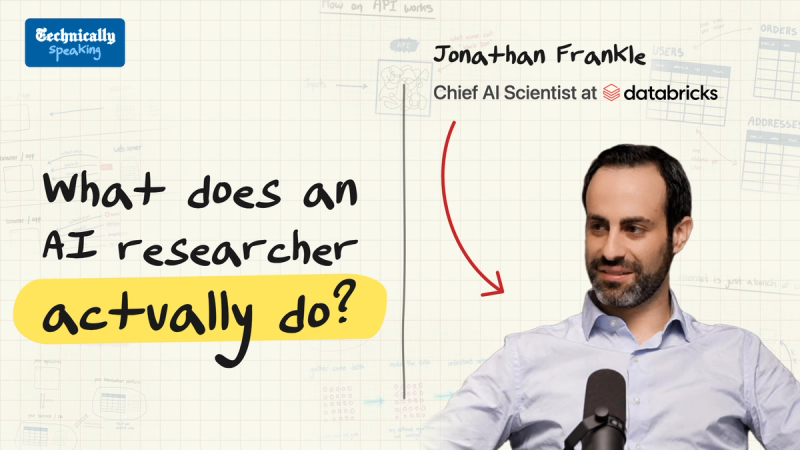
 Jonathan FrankleChief AI Scientist at

- Episode 1 · Thu, Oct 22
We can do better than --dangerously-skip-permissions

 Michael GrinichFounder & CEO at

Coming soon
- Episode 4 · Out Thu, Nov 12
The cloud is a building, and it's full

 Jake CooperFounder & CEO at Railway
- Episode 6 · Out Thu, Dec 3
Who gives a damn what database you use?

 Sam LambertCEO at PlanetScale
- Episode 7 · Out Thu, Dec 10
Are models getting better faster than we're getting dumber?

 James CowlingCo-founder & CTO at Convex
On the calendar
- Episode 8 · Thu, Dec 17Guest to be announced, Co-founder and CEO, Co-founder and CEO at

The Vibe Coder's Guide to Cloud + ScalingFree
How to survive your app going viral.
Will Raphaelson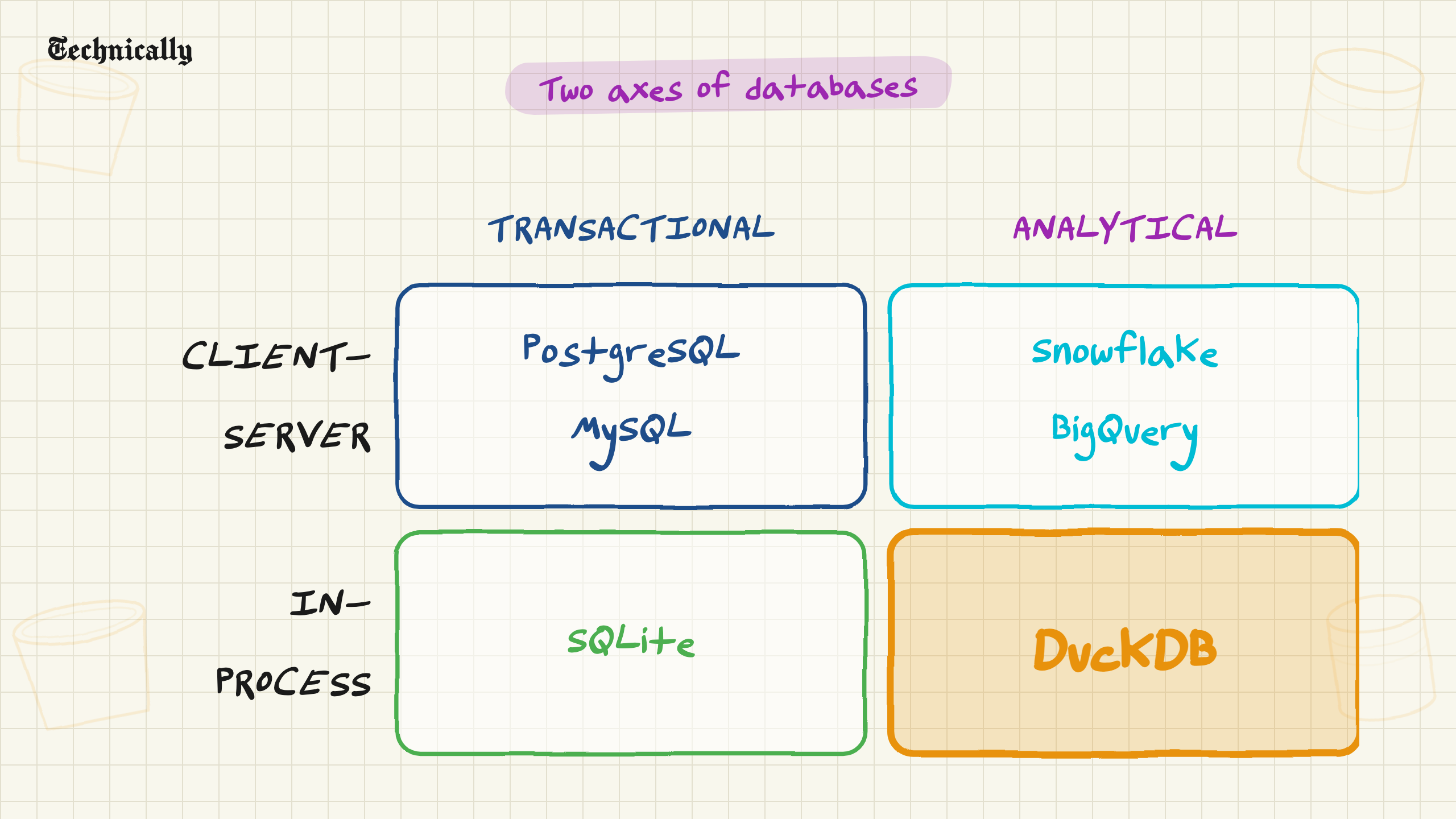
What's DuckDB?Free
Meet the world's friendliest database (allegedly).
 Garrett O'Brien
The Vibe Coder's Guide to DeploymentFree
How your app gets off your laptop and onto the real internet, and what to do when a deploy breaks.
 David Krevitt
What their products actually do and why they're so valuable.
 Alteryx
 AWS
 PlaidUIPath
Quick explanations of the concepts you see every day.












Learning Tracks
Curated collections of foundational articles to guide you through the basics of getting more technical at work.
AI, it's not that complicated ↗
How to understand and work effectively with AI and ML models and products.
- How do Large Language Models work?
Breaking down what ChatGPT and others are doing under the hood
- What's RLHF?
How AI models learned to stop being weird and start being helpful.
- What's GPT-3?
GPT-3 is a Machine Learning model that generates text.
- What’s a data science notebook?
Data Science Notebooks help data teams explore data with code.
Analyzing Software Companies ↗
The products and business models of leading software companies.
- Databricks is apparently worth $100B. What do they even do?
What we should really be asking is “What does Databricks not do?”
- What does Snowflake do?
Snowflake sells a powerful cloud data warehouse for analytics and data science teams.
- What does OpenAI do?
OpenAI is the most popular provider of generative AI models like GPT-4.
- What does dbt do?
dbt (no capitals) is a tool for transforming and organizing data in your warehouse.
Building Software Products ↗
How to make positive contributions to your product roadmap.
- The top 5 things PMs should know about engineering
Engineering and code basics that can make you a better PM to work with.
- What's code?
Code is step by step directions, but for computers.
- What's the internet?
A network of computers all connected to each other and sharing information.
- What's cloud?
Cloud is how companies rent infrastructure over the internet.
From Spreadsheets to Databases ↗
You've outgrown Excel, but you've got to put that data somewhere besides your parents basement.
- The Beginner's Guide to Databases
There are 300+ databases; what do they all do?
- SQL for the rest of us
If you’re not a data scientist but you have questions, you want to know SQL.
- The Excel User's Guide to Databases: Schemas
Why that schema change is going to take your engineers two weeks.
- The Excel User's Guide to Databases: Migrations
Why your feature is held up by a migration and why this is actually good.
How AI Models Actually Work ↗
Under the hood of today's powerful AI models: how they're trained, implemented, and otherwise used.
- What is Machine Learning?
How computers learn patterns from data — and why it’s the foundation for everything from stock prediction to ChatGPT.
- How do Large Language Models work?
Breaking down what ChatGPT and others are doing under the hood
- How do you train an AI model?
A deep dive into how models like ChatGPT get built.
- The beginner’s guide to AI model architectures
Unlike an onion, hopefully these neural network layers won't make you cry.
Software Engineering for Vibe Coders ↗
Your AI wrote the app. This is everything that happens after — where it runs, how it stays up, and what breaks first when real users show up. A six-part series, made with our friends at Railway.
- Software Eng for Vibe Coders: On Frontends + Backends
A new series to help non-engineers build products that can handle going viral.
- Software Eng for Vibe Coders: Databases + Storage
Where your vibe coded app actually keeps its data, and how it might break when real users show up.
- Software Eng for Vibe Coders: Auth + Security
How to make sure anyone on the internet can't just delete your app's data, and other security considerations.
- The Vibe Coder's Guide to Deployment
How your app gets off your laptop and onto the real internet, and what to do when a deploy breaks.
Working With Data Teams ↗
How to make positive contributions when working with analytics and data science teams.
- How do product analytics work?
Product analytics is how teams instrument and analyze data about their product usage.
- What your data team is using: the analytics stack
A deep dive into all of the tools that data teams use to do their work.
- SQL for the rest of us
If you’re not a data scientist but you have questions, you want to know SQL.
- What's the Modern Data Stack?
The new set of tools data teams use to get their jobs done.