When do you need to fine tune a model?#
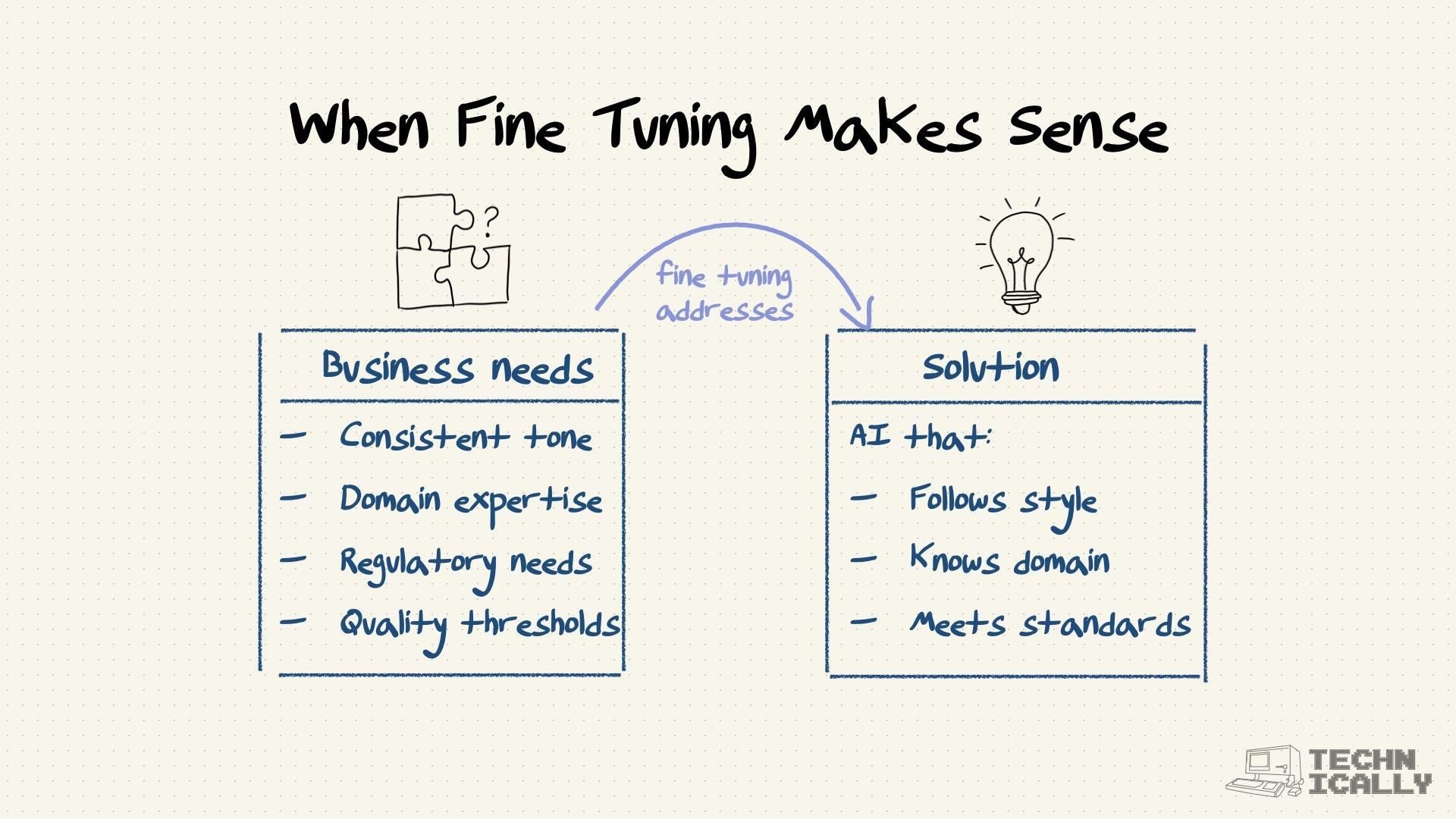
Fine tuning makes sense when you need consistent, specialized behavior that general models can't reliably provide:
Domain-Specific Language #
When your field uses terminology, formats, or conventions that general models don't handle well. Legal documents, medical records, and technical specifications often benefit from fine tuning.
Consistent Tone and Style #
If you need AI to write in your company's specific voice—whether that's formal, casual, technical, or creative—fine tuning can ensure consistency across all outputs.
For example, customer support responses that perfectly match your brand voice, or marketing copy that sounds like it came from your team.
Specialized Tasks #
When you need the model to follow specific procedures, formats, or decision-making processes that are unique to your organization.
Regulatory Requirements #
In industries with strict compliance needs, fine-tuning can help ensure AI outputs meet specific regulatory standards. For example, healthcare providers might fine-tune models to handle patient data according to HIPAA requirements, financial firms might ensure outputs align with SEC disclosure rules, or legal teams might train models to recognize and flag privileged information.